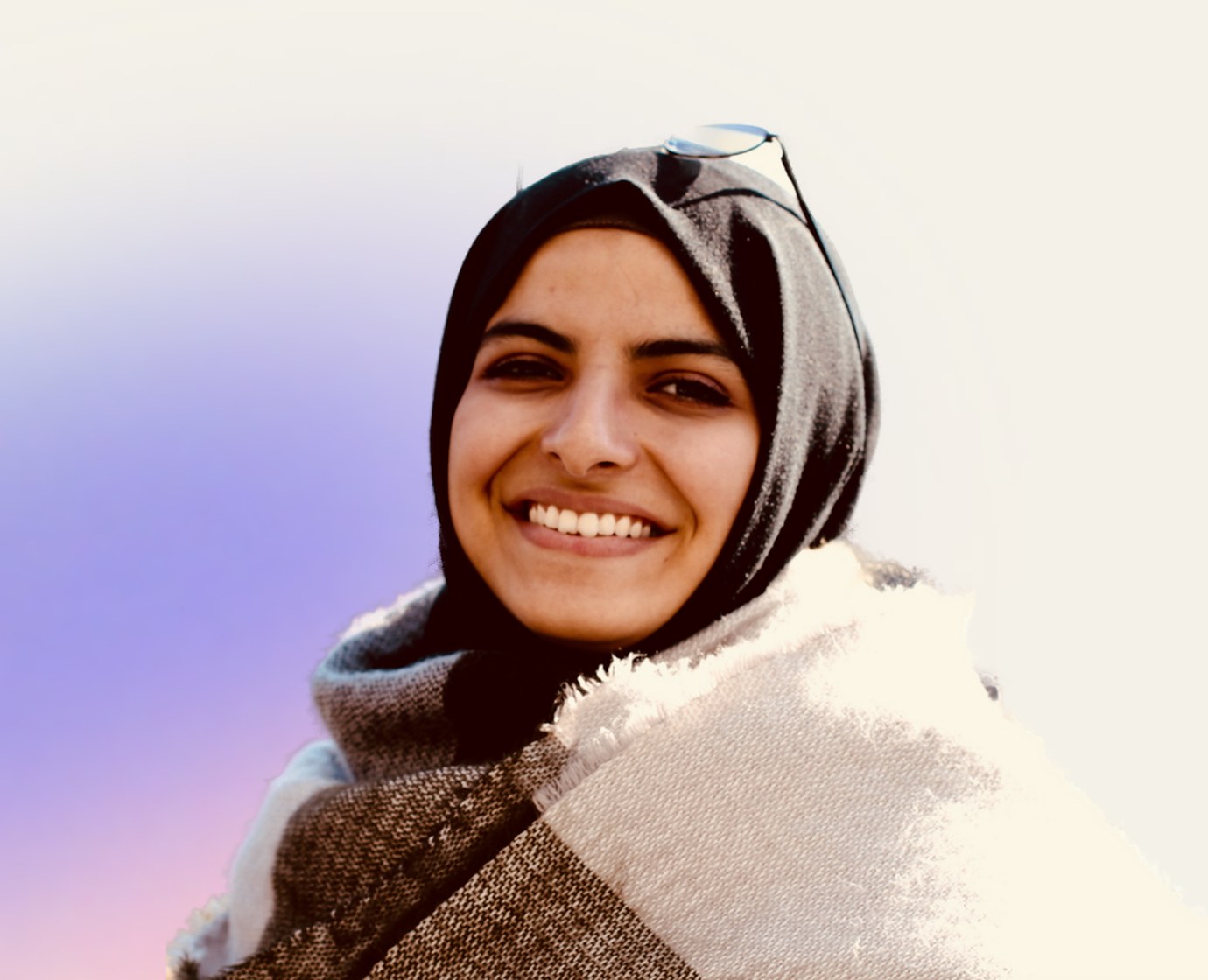
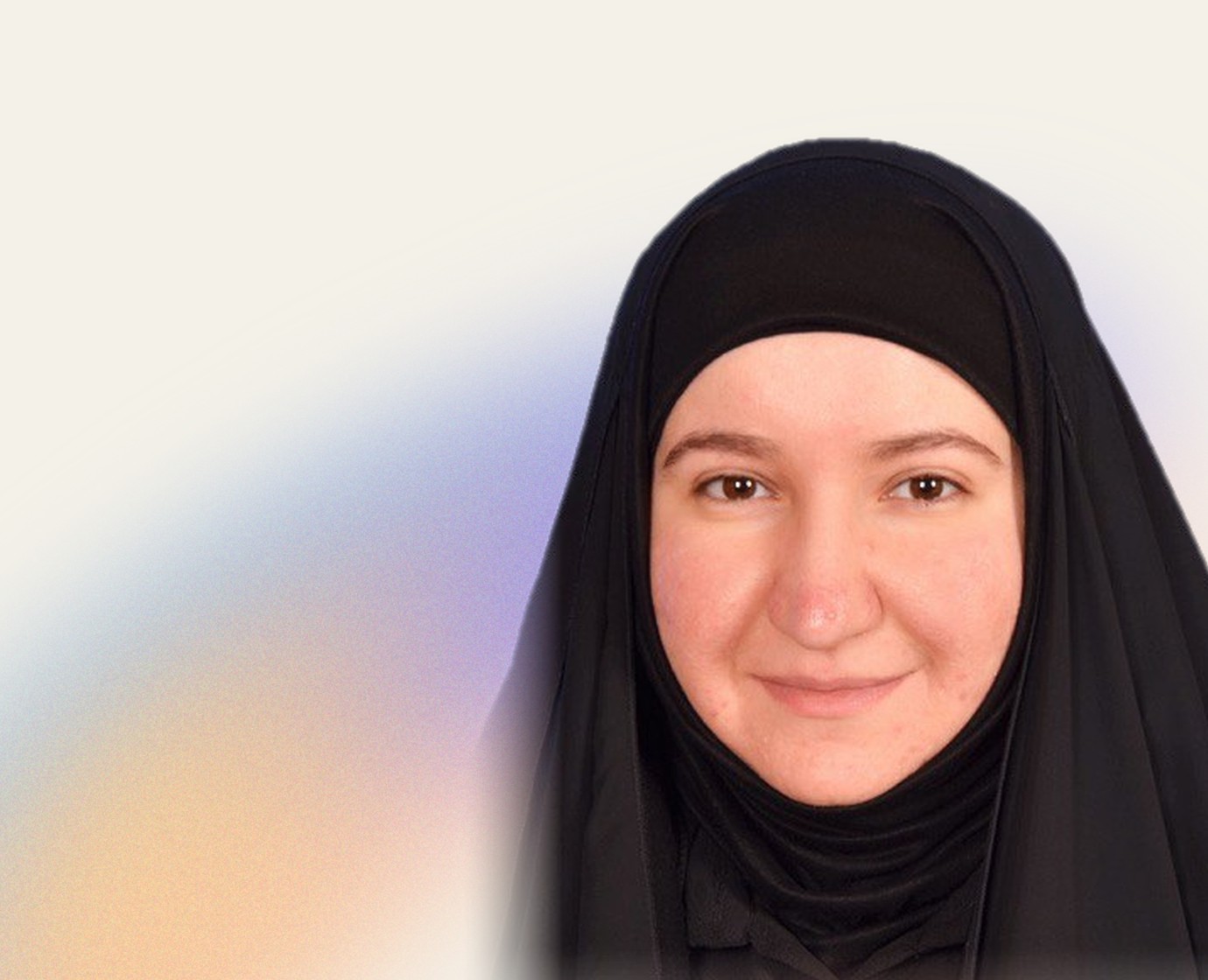
The survey results surprised her. In 2020, Zahraa had just run one of her first workshops, an introduction to Git and GitHub, and asked the attendees for feedback. Many said the same thing: it was the first workshop where they had actually understood the concepts, however hard they were.
It was the moment she realised she could make difficult ideas clear. Everything she has built since grew from it.
From maths to code
Zahraa studied mathematics at the University of Kufa and graduated in 2018. A few optional courses in C++ and MATLAB were enough: she fell in love with programming.
She became an organiser with GDG Najaf and Women Techmakers Najaf. Later, a school friend invited her to join a startup she was founding with two other friends, building websites. It didn’t last. “We didn’t have enough knowledge,” she says. So, she taught herself computer science through YouTube before joining CODED, a full-stack bootcamp in Kuwait, in 2020.
Learning how to learn
In 2021 she won a competitive place on Re:Coded’s React bootcamp. She had already finished one full-stack bootcamp, but this one let her go deeper into a specific tech stack, and gave her what the first hadn’t: soft skills and a community. She is still friends with her cohort today. “It was an amazing experience, because I learnt how to learn on my own, at my own pace,” she says. “It was the first time I learnt soft skills.”
With Re:Coded’s career support, she went back to CODED, this time to teach: first as a full-time teaching assistant, later as a part-time instructor.
Building the course she wished existed
After returning to Iraq in 2022, she started teaching in Najaf, beginning with a free, in-person HTML, CSS and GitHub course for 11 students. She had sat through many courses that looked great in the ads but led nowhere. “I wanted to create something with real skills that they can continue,” she says. Above all, she wanted to pass on what Re:Coded had given her: how to find answers and keep learning.
With a colleague she launched The Code People, an Instagram channel of short programming lessons voiced by Zahraa. Free content built trust, and trust led to paid courses.
In 2023 came her biggest course yet: a six-month, in-person full-stack bootcamp in Najaf, four hours a day, five days a week. She expected no one to apply. Sixteen people did. Alongside coding, she taught essential professional skills, including time management, the importance of networking, communication, and problem-solving. She also facilitated workshops covering topics such as protecting your digital data, finding your dream job, Linux systems and cybersecurity fundamentals, work–life balance, and how to pass technical interviews. Twelve graduated, and nine of them landed their first jobs as developers.
The next year she asked who was still being left out. “I was thinking about what women need in Iraq,” she says. Employers kept asking for soft skills, so she designed two three-month courses in workplace skills and office tools, one in the morning and one in the evening.
A hard year, and an email she almost ignored
2025 was a hard year. Her father, the person she was closest to in her family, passed away, and her plans to relaunch The Code People stalled.
In 2026 an email arrived about Re:Coded’s Resilient Futures Fellowship. She ignored it. “Another course,” she thought. “I’m not going to apply.”
Then she read the content. “I thought, this is going to help me a lot with The Code People,” she says. She was also leading a new project, an ERP system for a higher education institute. “As a person, I hesitate when making decisions and taking action. I really liked the content, and that was the main reason I enrolled.”
From dreaming to serving
In her application, Zahraa wrote about what makes a true leader: “I believe that everyone can lead, but not every leader understands their team members’ needs, teaches them and helps them grow and learn.”
The fellowship changed how she thinks about her work. “It’s not only about how we dream,” she says. “It’s about how we can meet people’s needs. How to be of service.”
Two modules stuck. Systems thinking now shapes her day job. “I always try to catch threats before they happen at the institute, and solve the roots of the problem, not just what’s in front of my eyes.” The module on education, and how learning can be personalised, changed how she teaches. “I noticed that I have more empathy and compassion for how others want to learn. I even try to use AI to meet people’s different needs.”
For her capstone, she turned that thinking to her own field, researching the gap between what graduates in Iraq can do and what employers need.
Next is relaunching The Code People. “I have the enthusiasm and I’m so excited,” she says. “I have the place. I have you guys.”
The teacher who never wanted to be ordinary already has nine developers in their first jobs to show for it. All that’s left is the first step.
It felt like someone had switched on a light in my brain.
Zahraa, asked to describe the fellowship in one sentence
The Resilient Futures Fellowship helps young leaders turn ideas into action. Developers in Iraq can also join Source Code Accelerator, free.